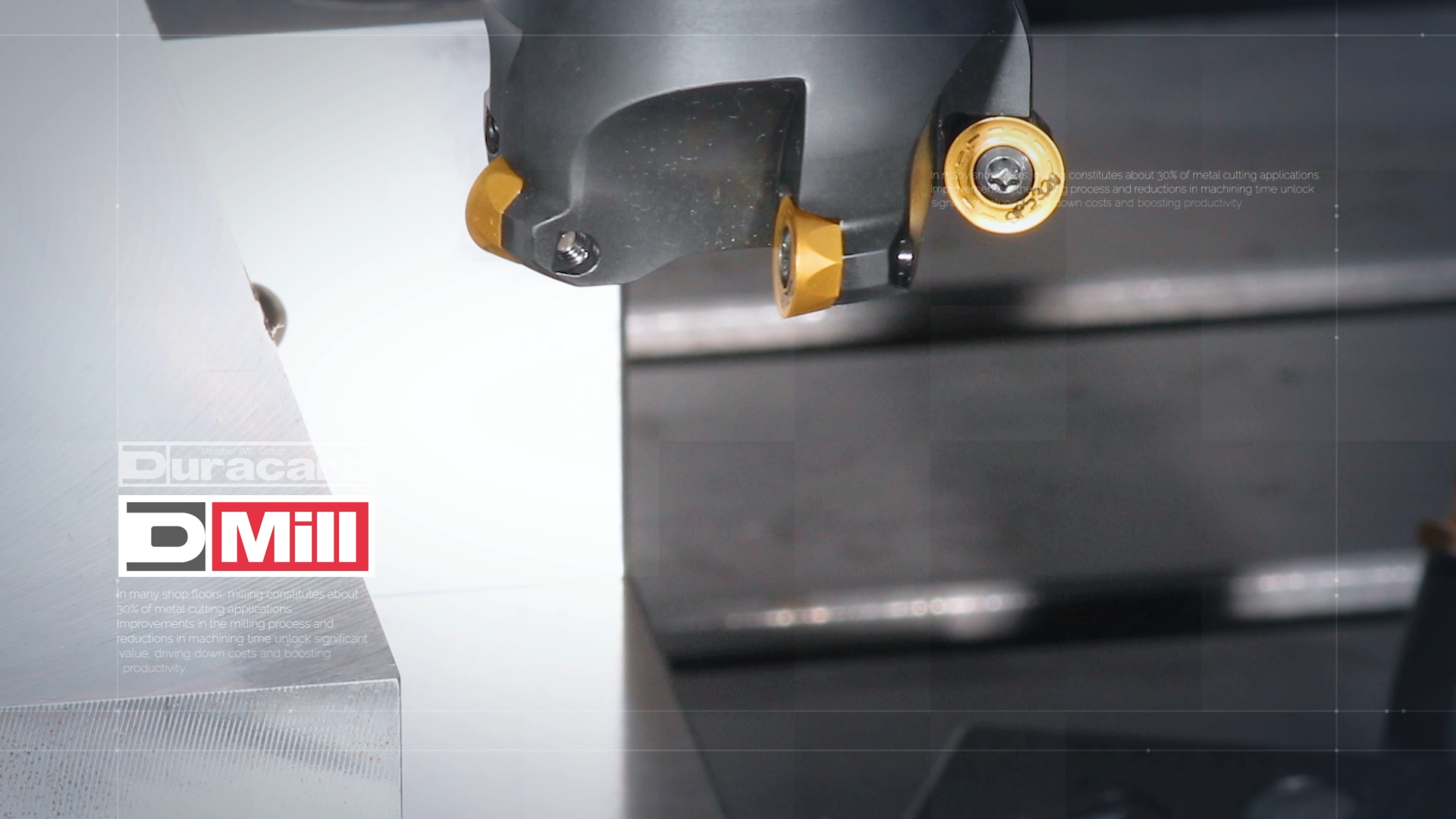
In many shop floors, milling constitutes about 30% of metal cutting applications. Improvements in the milling process and reductions in machining time unlock significant value, driving down costs and boosting productivity.
Critical factors for stable and productive milling operations include:
- Cutter Design: Incorporating advanced geometries like variable helix and pitch for vibration dampening, or micro and nano geometries for ultra-fine precision.
- Insert Geometry: Utilizing modern top-face geometries with positive rakes, chip deflectors, and controlled micro-geometries to enhance chip flow, reduce cutting forces, and extend tool life.
- Insert Grade: Leveraging the latest advancements in carbide grades and coatings (e.g., PVD, CVD, AlCrN, TiAlN, DLC, and multilayer/nano-coatings) optimized for specific materials like hardened steels, titanium, HRSA, and various alloys, ensuring superior wear resistance and thermal stability.
- Cutting Parameters: Optimizing speeds, feeds, and depths of cut to maximize material removal rates (MRR) while maintaining surface quality and tool life.
- Milling Strategy: Employing advanced strategies such as Dynamic Milling (maintaining a constant angle of engagement for higher material removal and extended tool life) or Plunge Milling (for specific applications to reduce cycle time and balance tool wear), alongside traditional Up Milling and Down Milling.
Duracarb addresses these needs with a wide range of innovative milling tools and solutions for machining all types of workpiece materials, ranging from soft steel to hard super alloys, and across all milling applications. Duracarb milling inserts are available in diverse geometries and advanced grades, assuring optimal milling operations. Our highly engineered cutters and inserts provide high-productivity milling, ensuring cost-effective solutions and enhanced profitability for our customers.